Are Brain-Computer Interfaces Actually Ready for Humans?
Core Thesis
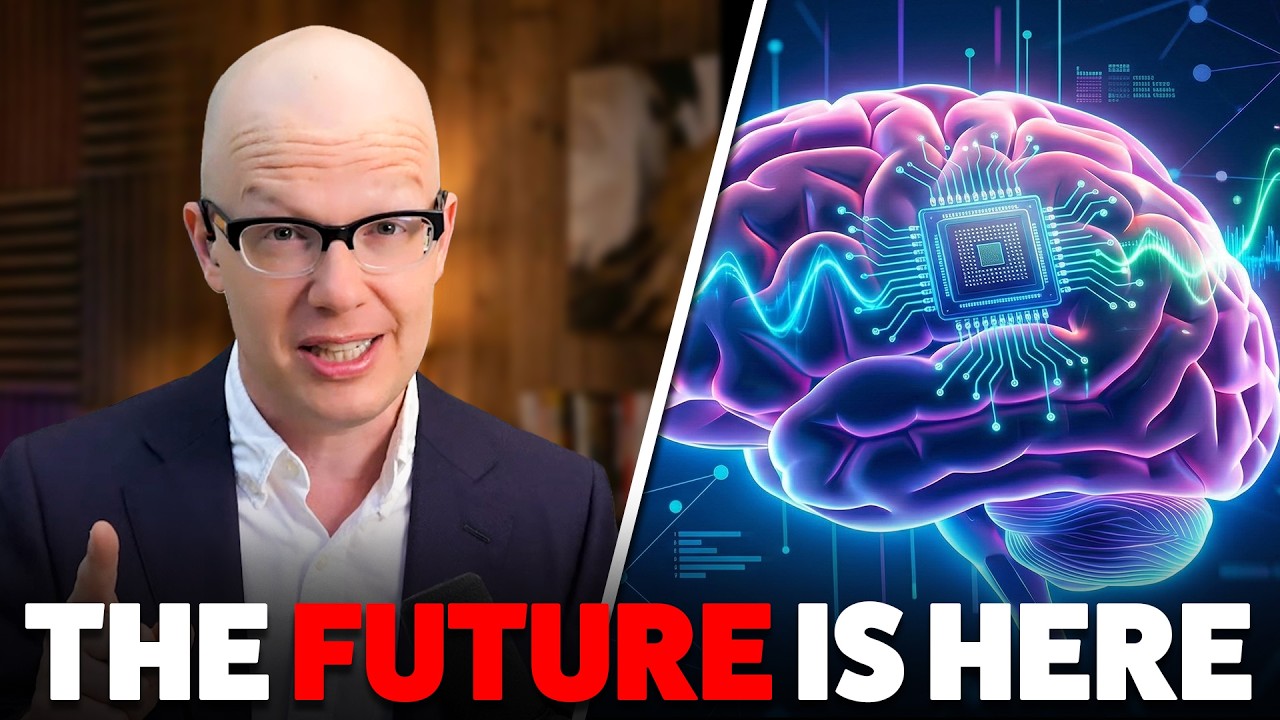
Brain-computer interfaces are moving from laboratory proof-of-concept into clinical trials. The Paradromics Kexus system uses implantable microwire electrodes placed close to individual neurons to achieve the highest signal resolution. By recording from large neural populations and using modern AI language models as decoders, the system can translate motor cortex activity into actionable outputs like speech. The technology is advancing predictably on a Moore's Law trajectory with electrode counts doubling every generation, enabling higher data rates and new applications beyond speech restoration into mental health monitoring.
Axioms
- Place sensors close to the brain's surface to maximize signal resolution from individual neurons
- Focus on clinical use cases with unmet medical needs first (like restoring speech), which opens doors to consumer enhancement later
- Use large language models as decoders because they handle noisy signals and can predict prospectively what the user intends
- Design systems to be power-efficient for mobile patients, not just wheelchair-bound users
- Frame device improvements using semiconductor analogies: each generation should have twice the data capacity of the previous
Decision Rules
If a patient population has severe disability + high medical need + patient motivation, invest in that use case first before consumer applications
If you want to read cognitive states reliably, you need high electrode density in the right brain regions; sparse sensors won't provide sufficient data
Proof Points
Paradromics recorded from sheep auditory cortex to validate data rates by decoding what sounds the sheep was hearing
from transcript
First patient implantations expected within 4-8 weeks with rehabilitation starting 3-4 weeks post-surgery
from transcript
Kexus design eliminates implantable battery complexity by using wireless inductive charging from external vest
from transcript
Contrarian Take
While many assume brain-computer interfaces will require non-invasive solutions, Paradromics argues that implanted electrodes with direct brain access are necessary for the signal fidelity and data rates needed to enable meaningful communication and control. The invasiveness concern is overblown because the surgical procedure is well-understood (similar to pacemaker implants), the device is fully subcutaneous except for a wireless vest, and the medical benefit for paralyzed patients far outweighs the surgical risk.
Operator Playbook
Start with the worst patient outcomes possible (severe paralysis, speech impairment) because desperation creates regulatory willingness and customer advocacy
Build a parallel non-clinical product roadmap from day one (e.g., Tempo for mental health) so that clinical learnings compound into consumer applications
Design for power efficiency and form factor reduction from the earliest prototypes so you can scale beyond wheelchair-bound populations to ambulatory patients
Use animal model testing (e.g., sheep auditory cortex) to validate your signal processing pipeline before human trials
One-Line Formula
Implantable neural interfaces with high electrode density + AI decoders = translating thoughts into text/speech at data rates approaching natural human communication speed