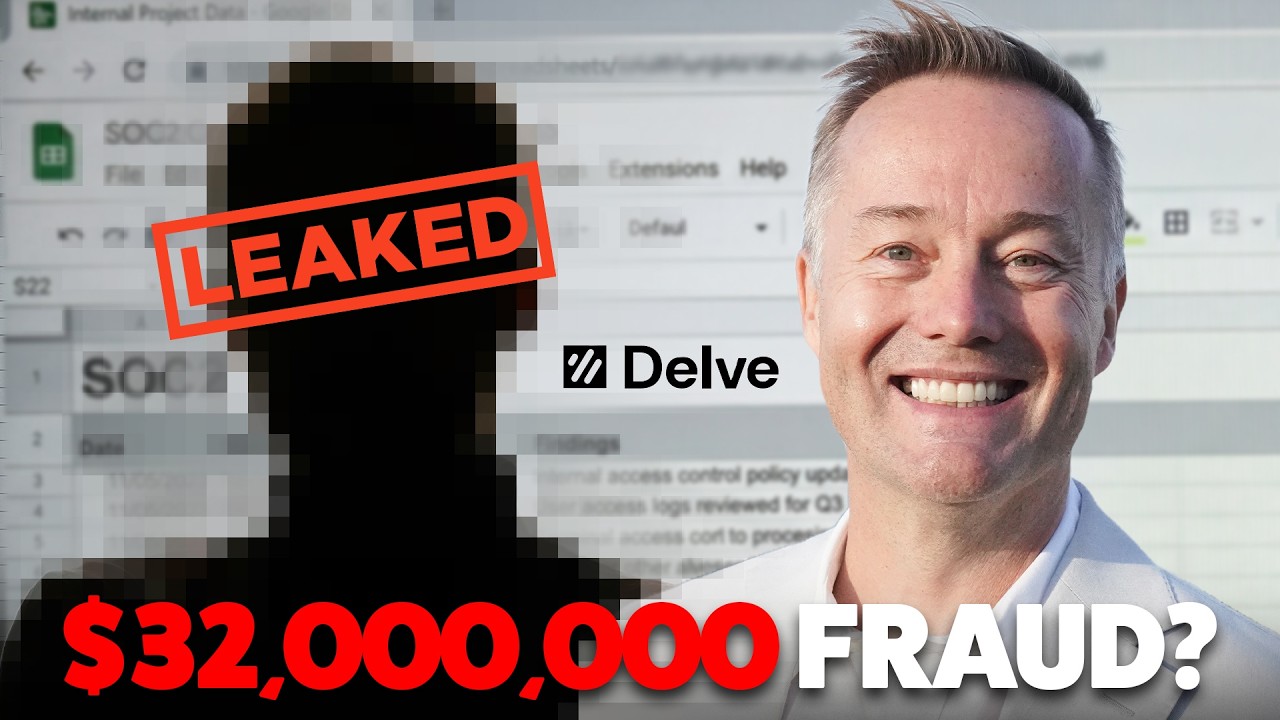
32 Million Dollar Fraud? Delve Scandal
Core Thesis
Delve allegedly faked SOC 2 compliance audits by generating boilerplate reports with identical error patterns across 500 clients, creating statistically impossible audit results (zero findings across all clients). This represents fraud disguised as software innovation, where founders bypassed rigorous audit work by simply copying template reports and swapping company logos. The scandal highlights that in the early-stage VC world where speed matters, investors often cannot verify founders' actual work and rely on founder claims. The culture of 'hacking' and rule-bending in startups (encouraged by YC's application question about 'tell us about a time you hacked something') can blur into straight fraud when founders optimize for speed over truth. Competitors like SEAL performing legitimate work face disadvantage when fraudsters offer fake compliance for pennies.
Axioms
- Compliance is not a product feature; it's a process with real audit standards—you cannot fake it with AI slop or boilerplate templates
- When every report shows zero findings, something is wrong—statistically impossible across 500 clients
- Ask vendors for proof of accreditation of their auditors, not just their claims; but know that founders can still fabricate paperwork
- The hacker mentality that breaks rules can easily become the fraudster mentality that breaks laws; the line between hustle and fraud is real
- Investors cannot see day-to-day work; we rely on founder claims; therefore some percentage of every cohort will commit fraud—the 'price of investing early'
Decision Rules
If a vendor shows you compliance reports with identical patterns across different companies, ask for hard evidence of independent auditor verification
If a product claims to automate compliance faster than competitors with same rigor, demand evidence—automation cannot replace audit quality
Proof Points
500 boilerplate reports discovered via data leak and forensic analysis by anonymous 'Deep Delver' whistleblower
from transcript
259 of 500 reports were Type 2 SOC 2 reports (highest rigor) with zero auditor findings, statistically impossible
from transcript
Data breach exposed background checks and Stripe tokens for customers including Lovable, Bland, Duo's Edge
from transcript
Part 1 of investigation posted on Substack; Part 2 expected to follow with additional evidence
from transcript
Contrarian Take
The startup culture that celebrates 'hacking' and rule-bending creates moral hazard where founders cannot clearly distinguish between hustle (bending rules within spirit of law) and fraud (breaking laws). When investors reward speed and punish delays, founders rationally optimize to fake it rather than build it rigorously. Delve's fraud was possible because: (1) compliance auditing is unglamorous and invisible to VCs, (2) early-stage investors move fast and cannot verify actual work, (3) startup culture celebrates audacity over integrity. The solution is not to hire more compliance experts (which slows fundraising) but to acknowledge that some fraud is inevitable and design ecosystem checks (journalist investigation, customer verification, third-party auditors) to catch bad actors after they're discovered.
Operator Playbook
If buying compliance software, demand proof that the auditor is genuinely accredited and independent—not just claimed
If you're a founder in compliance space, your competitive advantage is rigor and accuracy, not speed; compete on quality not hype
As an investor, accept that you cannot verify every claim; build in post-hoc verification mechanisms (customer feedback, third-party audits) rather than pre-investment diligence alone
If you're a founder tempted to fake metrics/compliance/reports, remember: you risk not just your company but your co-founders, customers, and industry
One-Line Formula
Fake compliance reports expose the gap between investor due diligence speed and founder execution verification—pure fraud happens in the blind spot