The $60 billion resource hiding in space, and the startup trying to mine it
Core Thesis
The most economical solution to platinum group metal scarcity is space mining rather than terrestrial mining. Astroforge is building unmanned, low-cost spacecraft that use magnetic docking and directed energy extraction to mine near-Earth asteroids. With 600,000+ cataloged asteroids available and traditional platinum mines in South Africa yielding only 14% gross margins, successful asteroid mining could deliver 90% gross margins while securing U.S. mineral sovereignty and enabling a new paradigm of material abundance.
Axioms
- Build hundreds or thousands of small, cheap spacecraft rather than one giant ship (volume scaling over single scale)
- Be transparent with investors about failures and detailed progress; write comprehensive monthly investor letters documenting what went wrong and how you'll fix it
- Mine must be soluble on Earth economics - focus on high-value commodity metals like platinum group metals, not speculative materials
- Expect 2-3 mission failures as you iterate; Elon failed 3 times with Falcon 1 before success - this is normal engineering
Decision Rules
If mission data shows communication is actually a power issue (not true comms failure), still count as progress on technical validation and plan fixes for next iteration
If you hit production costs above the risk-adjusted return target, reduce spacecraft complexity and data transmission rates rather than mission scope
Proof Points
NASA's Bennu mission successfully mined an asteroid and returned samples ~1.5 years ago, validating feasibility and providing Astroforge with NASA team members as advisers
from transcript
Astroforge launched Odin in Feb 2025 (first commercial deep-space mission), received first FCC license for commercial deep-space exploration, proved navigation systems despite solar panel failure
from transcript
Platinum group metals market is second-largest in the world after gold; would require 100 successful missions before Astroforge could materially depress prices
from transcript
Contrarian Take
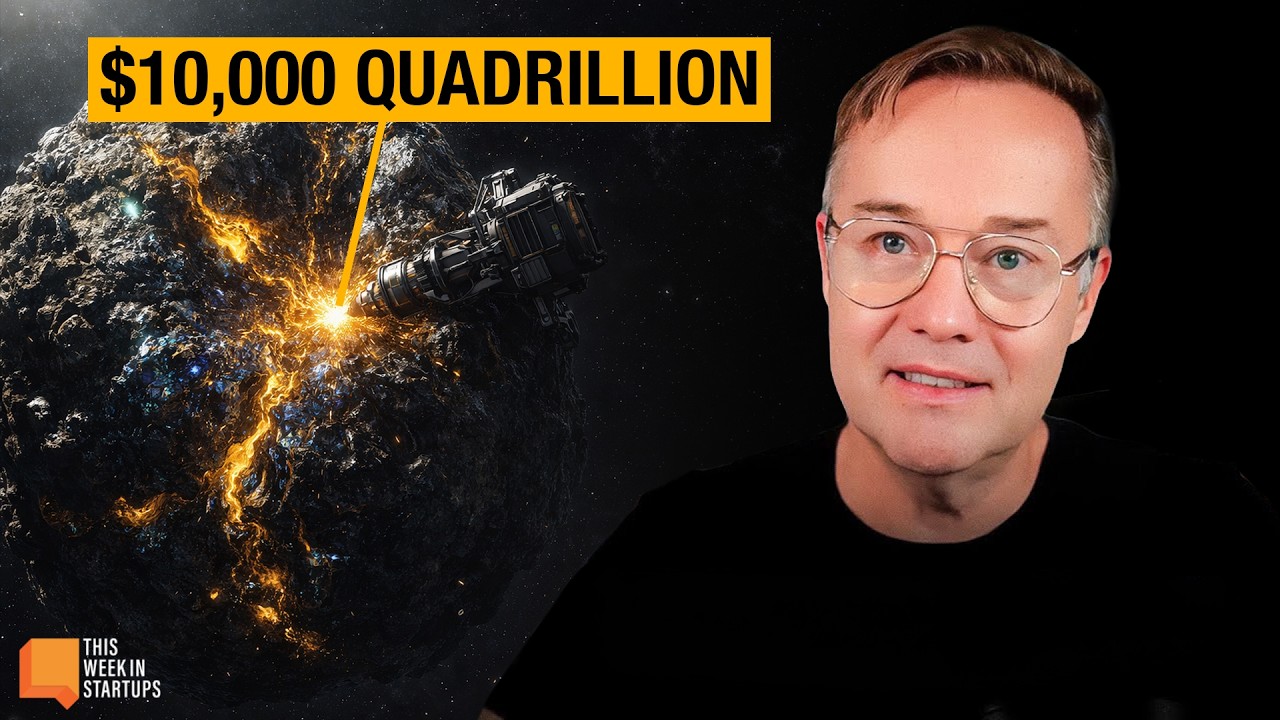
While everyone assumes asteroid mining is science fiction, the real constraint is not technology but economics. Astroforge's insight is that $10.4M per mission is viable because the target is high-value materials (platinum group metals worth $105M per load), not bulk commodities. The company is not trying to revolutionize space travel like SpaceX did for launch costs - instead it's leveraging existing Falcon 9 infrastructure and focusing on mission design efficiency. This makes it a boring, solvable engineering problem rather than a frontier moonshot, which is exactly why it works.
Operator Playbook
Launch early and small: Get your first spacecraft flying before you've solved every technical problem (Odin in Feb 2025 even with partial failure)
Document everything publicly: Live-stream your control room, write detailed post-mortems when you fail, share exact data so the world learns from your iterations
Hire people with deep domain expertise: Get former NASA mission leads and planetary scientists on your team, not generalists
Think in volume terms: Design for 100+ missions, not one perfect mission; costs and reliability improve with scale
One-Line Formula
Extract commodity-value metals from magnetically-climbable asteroids using cheap unmanned spacecraft to achieve higher margins and secure U.S. mineral independence.
Entity Graph
Guests
Also Referenced
Dante Loretta
Discussed · Adviser at NASA/Astroforge
These individuals are referenced in the conversation but did not appear as guests.